
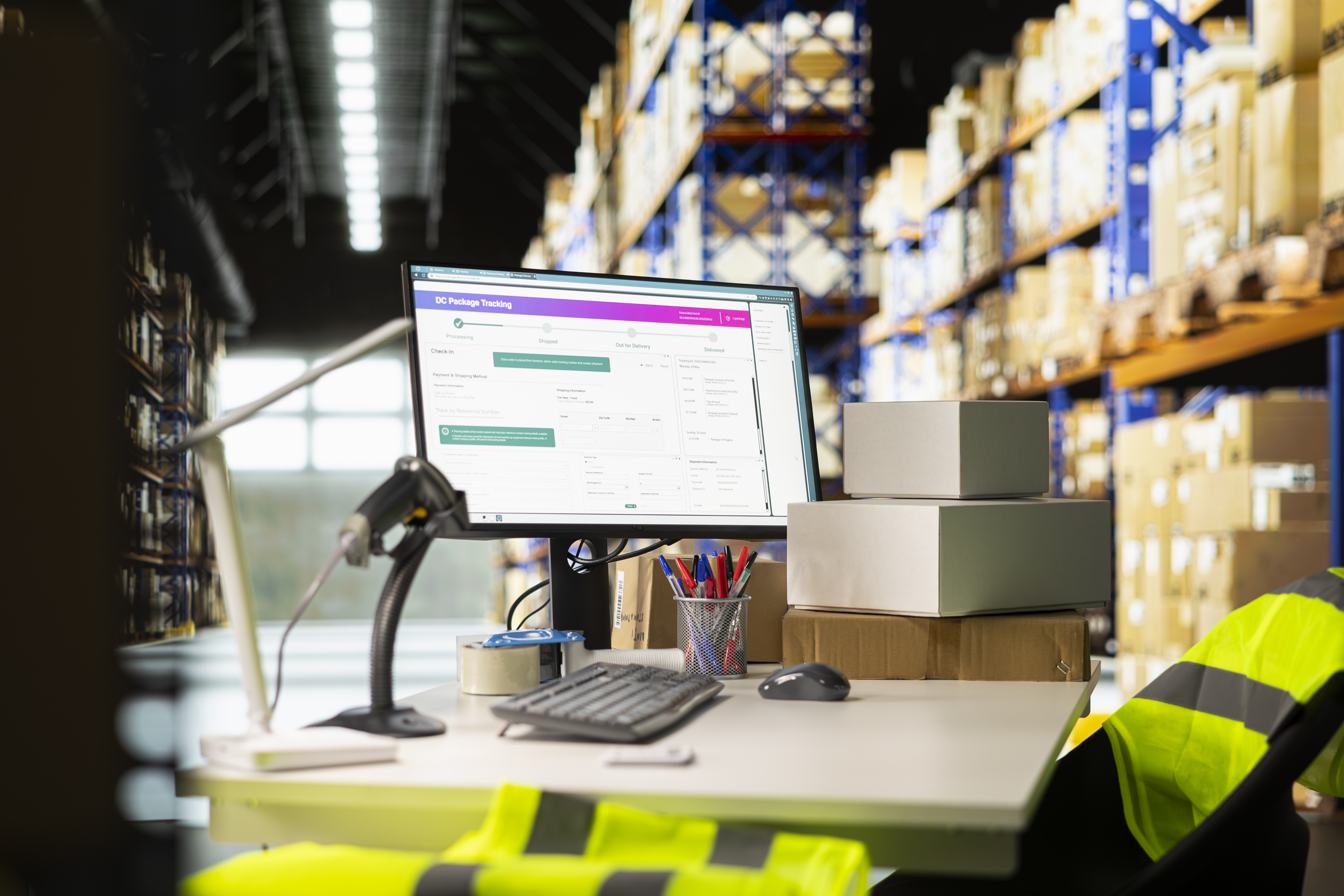
Ask most brand owners where a specific unit of their product is right now, and many cannot answer with complete confidence.
That visibility gap can create opportunities for counterfeiting, product diversion, unauthorized distribution, and grey-market activity. Track and Trace Labels in India help close this gap by giving individual products, batches, or packages a unique digital identity that can be monitored and verified throughout the supply chain.
From manufacturing and warehousing to distributors, retailers, and consumers, track and trace technology creates a digital record of a product’s journey.
But how does it actually work?
What Is Track and Trace?
Track and trace is a system that enables brands to identify products individually and record their movement through different stages of the supply chain.
Depending on the product and risk level, identification can be based on:
- Unique serial numbers
- QR codes
- Barcodes
- Batch numbers
- Randomized identification codes
- Digital authentication IDs
- Serialized security labels
A Track and Trace Labels manufacturer in India can integrate these identifiers into physical labels so that every product receives a unique identity at the point of manufacturing or packaging.
That identity can then be connected to a centralized digital platform where relevant supply-chain events are recorded.
How Does Track and Trace Work?
The basic process can be divided into several stages.
1. Unique Product Identification
The process begins by assigning a unique identity to the product.
For example, instead of giving 10,000 bottles the same QR code, each individual bottle can receive a different serialized code.
This code may be printed or encoded onto a:
- Security label
- QR code label
- Holographic label
- Product authentication label
- Barcode label
- Tamper-evident label
Product Authentication Labels in India can therefore function as the physical connection between the product and its digital identity.
2. Code Registration
Once the code is generated, it is registered in the authentication or track-and-trace system.
Relevant product information can be associated with the unique identifier, depending on the application.
This may include:
- Product name
- SKU
- Batch information
- Manufacturing date
- Production location
- Destination
- Serial number
- Distribution information
- Authentication status
The result is a digital identity that can be referenced whenever the product is scanned.
3. Scanning Creates a Digital Journey
Once the product leaves manufacturing, the unique code can be scanned at different points in the supply chain.
For example:
Manufacturer → Warehouse → Transporter → Distributor → Retailer → Consumer
Each authorized scan can generate an event containing information such as the time, location and stage of the product journey.
Over time, these events create a digital trail.
For brands using Track and Trace Labels manufacturer in India solutions, the objective is not simply to print a QR code. The real value comes from connecting the physical identifier with a system that can capture, analyze and act on scan data.
4. Supply Chain Visibility
Once scanning data is collected, brand teams can use a dashboard to understand product movement.
Depending on the system, the dashboard may help identify:
- Products scanned at unexpected locations
- Unusual movement patterns
- Duplicate scans
- Repeated scans of the same code
- Products appearing outside their assigned market
- Potential grey-market diversion
- Distribution gaps
- Authentication activity
This transforms a conventional security label into a data-driven Security Label Solution.
Instead of discovering a distribution problem only after receiving a customer complaint, brands can potentially identify unusual activity much earlier.
5. Consumer-Facing Product Authentication
One of the most important developments in track and trace is the ability to connect supply-chain identification with consumer authentication.
A consumer can scan the QR code on a product using a smartphone.
A QR Code Authentication in Noida solution can be designed to provide information such as:
- Product authenticity status
- Product information
- Verification instructions
- Batch or manufacturing information
- Brand information
- First-scan confirmation
- Potential duplicate or suspicious scan alerts
This gives consumers a simple way to participate in product authentication while providing brands with additional interaction data.
Why a Standard QR Code Is Not Enough
A QR code by itself does not automatically create a secure track-and-trace system.
A basic static QR code can potentially be copied, photographed or reproduced.
For higher-risk products, brands can use Customizable QR Code Security Labels in Noida that connect the physical label to a dynamic digital authentication system.
More advanced Highly Customizable QR Code Security Labels in Noida can incorporate additional security logic, unique identifiers and authentication mechanisms designed around the brand’s specific requirements.
The important distinction is:
A QR code is an identification technology. A secure authentication system is the infrastructure behind it.
Combining Track and Trace with Holographic Security
Track and trace does not have to replace physical security features.
In fact, combining digital and physical technologies can create multiple layers of product protection.
A product may incorporate:
- QR authentication
- Serialized identification
- Holographic security
- Tamper evidence
- Destructible label construction
- Security printing
- Variable data
- Unique numbering
- Track-and-trace functionality
For brands considering Hologram Packaging Solutions, a holographic element can provide a visible physical security layer, while a unique QR code provides digital authentication and traceability.
Hologram Security Solutions can therefore work alongside digital authentication rather than being treated as an alternative to it.
Track and Trace for Different Industries
Track and trace is no longer limited to a single industry. The technology can be adapted according to the product, distribution model and security risk.
Pharmaceuticals
Pharmaceutical products can benefit from serialized identification and authentication because product integrity and supply-chain visibility are critical.
A Pharmaceutical Security Labels Manufacturer in India can develop labels incorporating serialization, QR authentication, tamper evidence and other security features depending on the packaging requirements.
Track and trace can help brands identify unusual scanning activity and improve visibility across distribution channels.
Liquor and Beverages
Liquor and beverage products can face challenges involving counterfeiting, refilling, unauthorized distribution and tax compliance.
Beverage Authentication Labels in Noida can combine physical security features with digital verification.
For regulated products, Liquor Tax Stamp Solutions and Security Tax Labels can also be integrated into broader product identification and authentication strategies where applicable.
FMCG and Consumer Goods
High-volume consumer products can benefit from product authentication and supply-chain visibility, particularly where counterfeit products or parallel distribution are concerns.
Consumer Goods Security Labels in India can incorporate QR authentication, serial numbers, holographic elements and other security technologies.
Similarly, Anti-Counterfeit Packaging Labels in India can combine physical and digital protection to make product verification easier.
Automotive Products
Automotive spare parts and components can be exposed to counterfeit replacement products and unauthorized distribution.
Secure Packaging Solutions for Auto Industry applications can combine:
- Product identification
- QR authentication
- Barcode technology
- Holographic security
- Serialization
- Brand protection
Automotive Barcode Labels Manufacturers in Noida can support applications where product identification and scanning are required across manufacturing, warehousing and distribution.
Track and Trace vs. Product Authentication
These concepts are connected but are not exactly the same.
Product authentication answers:
“Is this product genuine?”
Track and trace answers:
“Where has this product been and what events have been recorded during its journey?”
A modern product security system can combine both.
For example, a unique QR code can allow a consumer to authenticate the product, while the same underlying identity can provide the brand with information about previous scans and supply-chain activity.
This creates a more comprehensive Product Security and Brand Protection ecosystem.
What Happens When a Code Is Scanned Multiple Times?
Repeated scanning does not automatically mean that a product is counterfeit.
However, unusual scan behavior can be an important signal.
For example, imagine a product manufactured for distribution in Delhi. If the same unique code suddenly appears in multiple distant locations within a short period, the system could flag the activity for investigation.
Similarly, if a supposedly single-use authentication code is repeatedly scanned, the brand may investigate whether:
- The code has been copied
- The product has been duplicated
- The packaging has been reused
- The product has entered an unauthorized channel
- The consumer is repeatedly checking the product
The purpose of these alerts is not simply to reject the product automatically, but to provide the brand with actionable information.
Making Track and Trace Actionable
Collecting scan data is only the beginning.
The real value comes from converting that data into useful business intelligence.
Brands can establish rules for identifying unusual events, such as:
- Duplicate authentication attempts
- Unexpected geographic locations
- Excessive scans
- Unusual distribution patterns
- Products appearing outside assigned territories
- Abnormal authentication activity
These events can then be reviewed by the appropriate teams.
A successful track-and-trace system therefore combines physical labels, digital authentication, data collection and operational response.
Choosing the Right Track and Trace Solution
Before selecting a solution, brands should evaluate several factors.
Product Risk
Understand whether the primary concern is counterfeiting, diversion, unauthorized distribution, refilling or consumer authentication.
Packaging
The code must be compatible with the actual packaging material and printing/application process.
Authentication
Determine whether the system needs simple product identification or consumer-facing authentication.
Security
High-risk products may require multiple layers, including High Security Labels in India, holographic elements, tamper evidence and serialized QR codes.
Scalability
The solution should be capable of handling the expected number of products, codes, scans and supply-chain events.
Data and Dashboard
The brand should understand how scan information is stored, accessed and converted into actionable insights.
Integration
For larger organizations, integration with existing ERP, manufacturing, warehouse or distribution systems may also be important.
Track and Trace as Part of Brand Protection
Track and trace should not be viewed as just a QR-code printing exercise.
When properly implemented, it becomes part of a broader Brand Protection Labels and product security strategy.
A comprehensive solution can combine:
Physical Security + Digital Authentication + Serialization + Track & Trace + Consumer Verification
For example, a single product could carry a security label containing a holographic feature and unique QR code. The hologram provides a visible physical security element, while the QR code connects the product to its digital identity.
This combination can make it more difficult for counterfeiters to replicate the complete authentication experience.
Holosafe's Track and Trace Approach
Holosafe’s approach combines physical product security with digital authentication and traceability.
Depending on the product and application, the solution can incorporate Track and Trace Labels in India, serialized identification, Product Authentication Labels, customizable QR security labels, holographic security and consumer-facing authentication.
The objective is to help brands move beyond simply identifying counterfeit products and build greater visibility into how products move through the supply chain.
For brands evaluating digital product authentication manufacturers in India, the right solution should be designed around the actual product, packaging, distribution model and security risk.
Want to see how track and trace can work for your product? Get in touch with Holosafe for a live demonstration of a product authentication and track-and-trace solution.